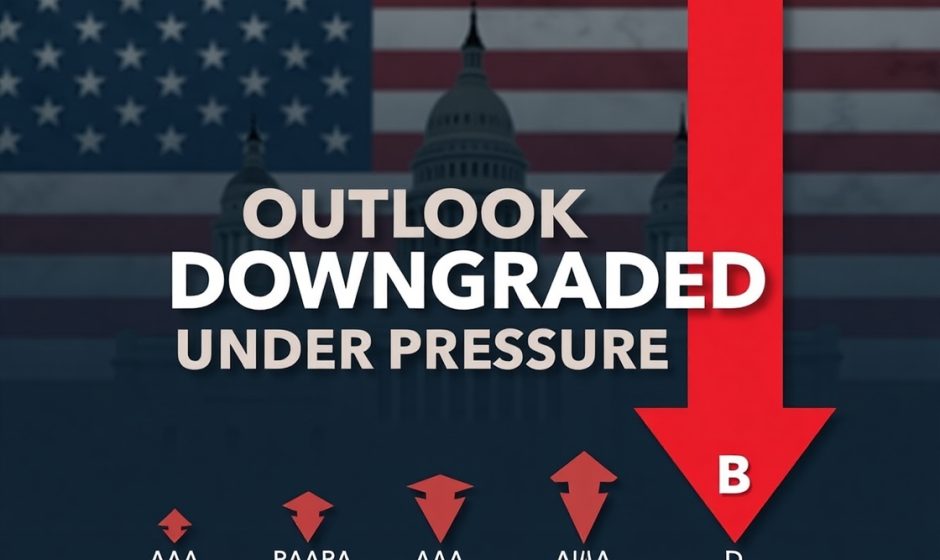

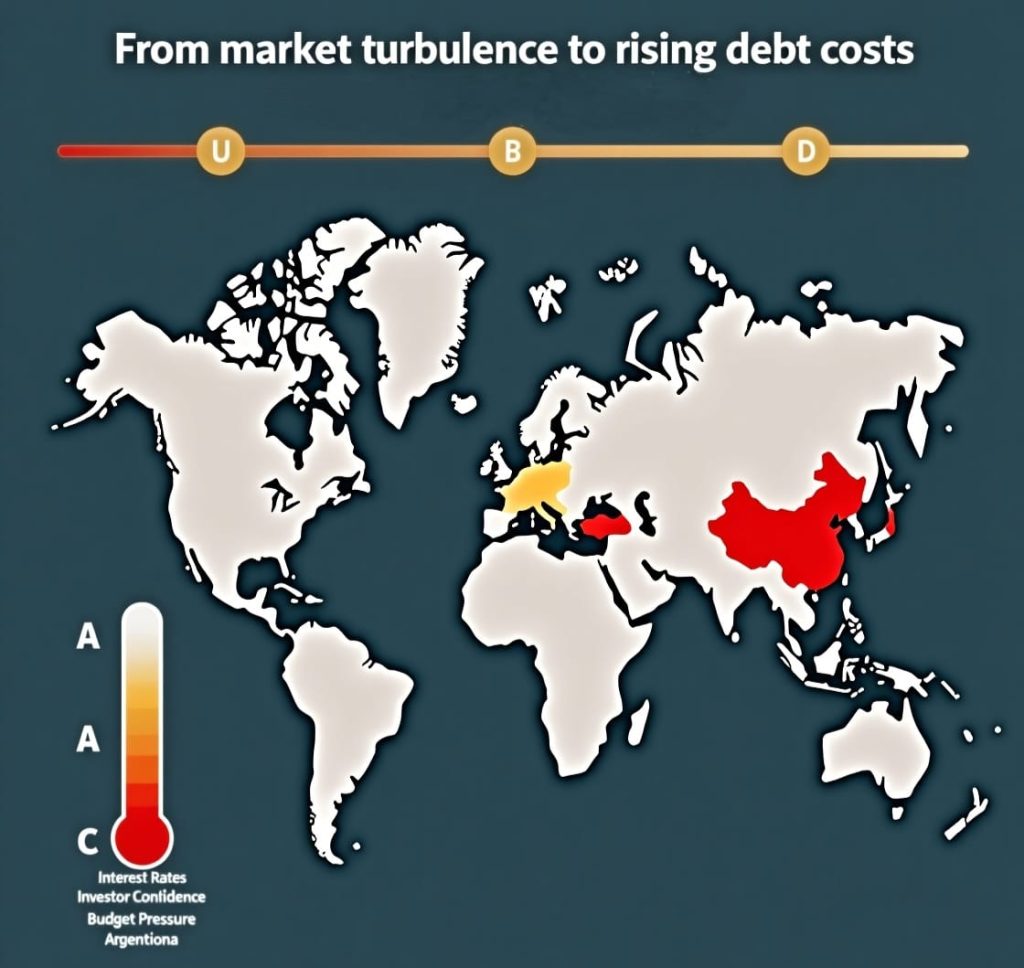
Recently, Moody’s downgraded the credit outlook of the United States, signaling concerns over its fiscal direction and rising debt levels. While the U.S. still holds a high credit rating, this move has reignited global conversations about the consequences of a sovereign credit rating downgrade. But what exactly does this mean? and what happens when a country receives such a downgrade?
A Warning Sign for Global Markets
When agencies like Moody’s, Fitch, or S&P lower a country’s credit rating, it reflects a growing risk that the country may struggle to repay its debts. This undermines the country’s financial credibility and sends a clear warning to investors and markets around the world.
1-Borrowing Becomes More Expensive
A lower credit rating translates into higher interest rates for future borrowing. The country has to offer more attractive returns to convince lenders to take the risk. This increases the cost of servicing existing and new debt, leading to even more financial strain.
2- Pressure on the National Budget
As loan costs rise, the government ends up spending a larger chunk of its national budget on interest payments. This leaves less money for essential services like education, healthcare, and infrastructure… putting pressure on public services and development efforts.
3-Investor Confidence Takes a Hit
A downgrade can shake the trust of foreign and local investors. It may lead to capital flight, reduced investments, and hesitation from international partners. When confidence erodes, the economy becomes more fragile and recovery more difficult.
4-Ripple Effects on Banks and Businesses
Local banks and companies are also affected. They may face higher borrowing costs, reduced access to international markets, and decreased stock or bond values. This weakens the private sector, slows job creation, and discourages innovation.
5- Financial Market Turmoil
Credit downgrades tend to trigger instability in stock markets and currency values. The national currency might depreciate, leading to inflation and a drop in consumer purchasing power. In worst cases, this can even lead to social unrest.
Is There A Way Back?
A downgrade is not the end of the road. Countries can take steps to rebuild trust through fiscal reforms, debt restructuring, transparency, and long-term planning. Support from institutions like the IMF and international partnerships can also aid in stabilizing the economy and improving the credit rating over time.
In Summary
A credit rating downgrade is more than just a technical move, it has real consequences for a country’s economy, reputation, and people. While the impact is serious, it is reversible with the right strategies, governance, and commitment to reform.
Read Also