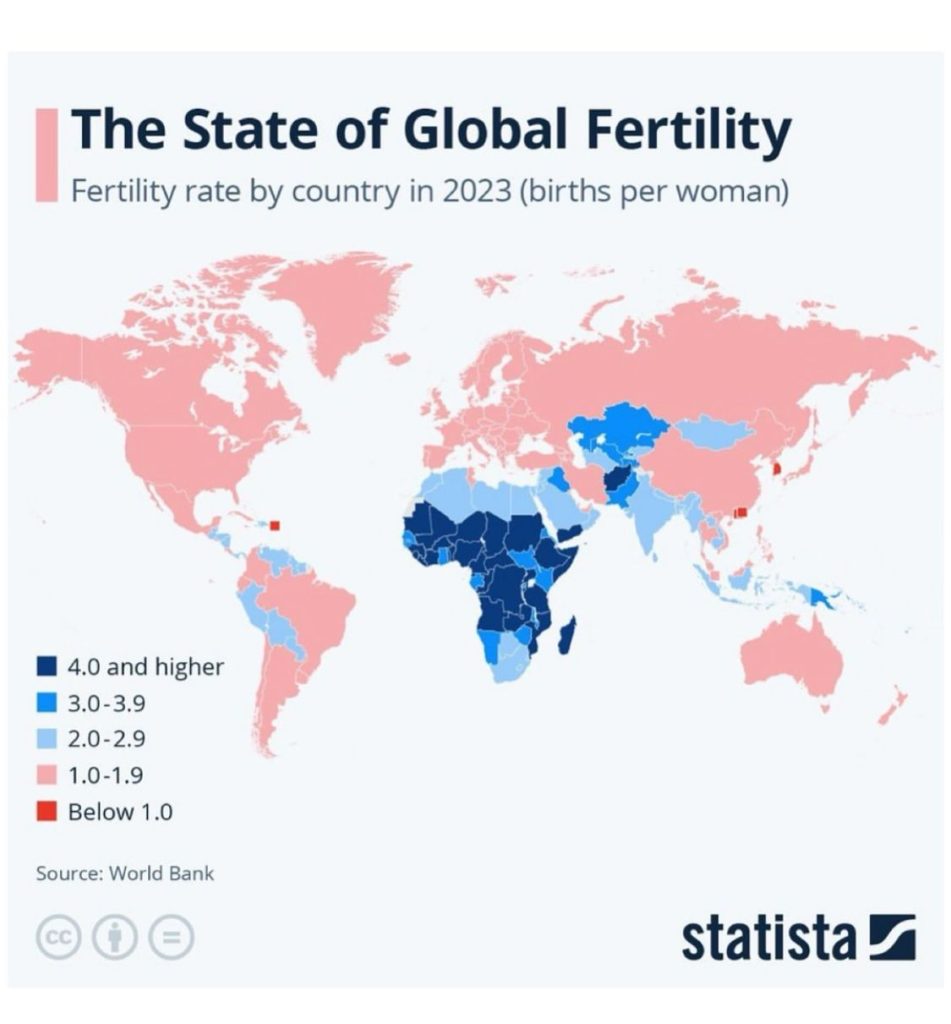
A Global Shift in Fertility
The average number of children per woman has been steadily falling worldwide, and demographers say the implications could be historic. For a population to remain stable, a woman needs to have on average 2.1 children. But today, much of Europe, North America, and East Asia is recording birth rates below this replacement level. This demographic decline is not just a personal or cultural trend it is reshaping how societies prepare for the future.
Developed Nations on the Decline
Some of the world’s largest economies are seeing dramatic drops. South Korea and China are now averaging fewer than one child per woman. A statistic that would have been unthinkable just a generation ago. With fewer children being born, these countries are facing the challenge of an aging population and a shrinking workforce, putting pressure on pensions, healthcare systems, and economic growth. Even countries like the United States and much of Western Europe, while slightly better, remain below replacement level, signaling long-term demographic strain.
Africa’s Growing Youth Advantage
In contrast, sub-Saharan Africa tells a very different story. Fertility rates remain high, with women averaging four or more births. This creates a young and expanding population that could fuel rapid economic growth if paired with strong education systems and job creation. However, it also brings challenges in terms of infrastructure, healthcare, and political stability. This demographic divide between aging and youthful regions may redefine global power dynamics in the coming century.
What the Future Could Look Like
Experts warn that falling birth rates are not just numbers on a chart they could reshape entire economies and societies. Countries with shrinking populations may struggle to innovate, sustain their military power, or care for older generations. Meanwhile, younger regions might gain influence on the world stage. Whether this transition leads to global collaboration or competition will depend on how governments and societies adapt to these changes.
Possible Reasons Behind the Decline
Several interlocking forces explain why many countries are having far fewer children than before. Rising urbanization and the high cost of housing and childcare make raising multiple children expensive and logistically harder than in previous generations. Women’s educational attainment and labor-force participation have increased dramatically, and with that comes delayed marriage and childbirth as career and personal goals take priority. Access to effective contraception and family planning gives couples more control over timing and number of children. Cultural shifts also matter: changing attitudes toward marriage, parenthood, gender roles, and personal fulfillment mean many choose smaller families or none at all. Economic uncertainty , from unstable job markets to housing and pension concerns further discourages long-term family planning. Finally, policy environments play a role: countries with limited parental leave, weak childcare support, or unpredictable social safety nets see sharper declines than those with family-friendly systems.
check the video below!
Source: World Bank, Statista (2023)