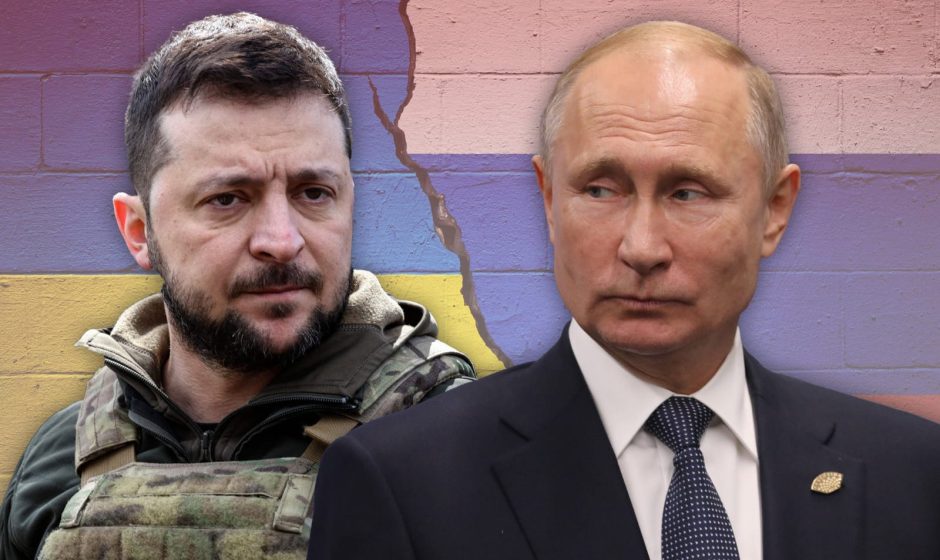

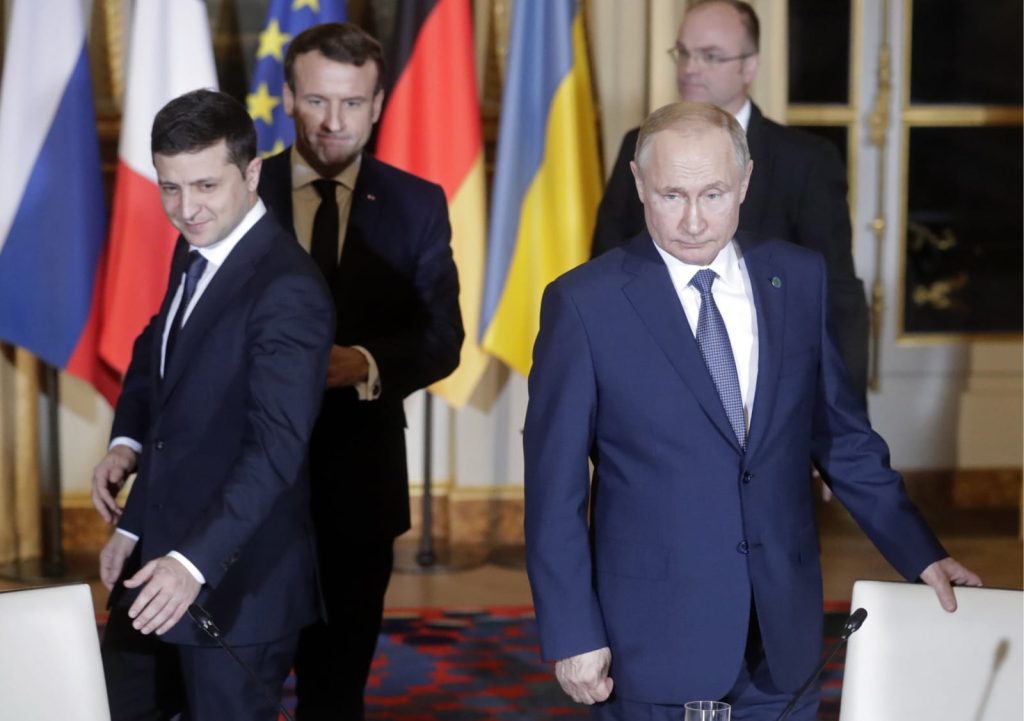
Russian President Vladimir Putin recently made a bold statement, asserting that any peace agreement between Russia and Ukraine would be invalid due to a decree issued by Ukrainian President Volodymyr Zelensky. The decree, which was enacted in 2022, banned any negotiations with Putin after Moscow’s illegal annexation of Ukrainian territories, including parts of Donetsk, Luhansk, Zaporizhzhia, and Kherson. Putin’s remarks, made during an interview with Russian state TV, reflect his continued stance against negotiations that would recognize Ukraine as an independent state. The Russian leader’s comments highlight his narrative questioning the legitimacy of the Ukrainian government and its sovereignty, positioning Zelensky as an illegitimate figure unfit to engage in peace talks.
Putin’s Attack on Zelensky’s Legitimacy
Putin’s statements are part of a broader campaign by Moscow to delegitimize Zelensky’s leadership. The Russian president has frequently asserted that the Ukrainian leader’s actions, particularly the imposition of martial law and the suspension of elections, render his presidency invalid. Zelensky’s term was originally set to end in May 2024, but the martial law he declared due to the war, and his decree prohibiting negotiations with Russia, have fueled Putin’s argument that Zelensky cannot negotiate in good faith. Putin claimed that as long as the decree remains in place, Ukraine’s government has no right to engage in any formal peace process with Russia. Moreover, he asserted that Zelensky could not reverse the decree on his own; only Ukraine’s parliament speaker, who would temporarily become president once Zelensky’s term concludes, could revoke it.
The ISW’s Assessment: Putin’s Narrative and the Legitimacy of Negotiations
The Institute for the Study of War (ISW), a prominent Washington-based think tank, has closely analyzed Putin’s remarks. According to the ISW, the Russian president’s rejection of Zelensky’s legitimacy is part of a broader effort to undermine any potential peace agreement. Putin’s comments set the stage for Russia to potentially violate any future peace deal by arguing that the Ukrainian government itself is not legitimate. The think tank suggests that Putin’s statements serve as a pretext for Moscow to dismiss any treaty signed by Zelensky or Ukrainian negotiators. By positioning the decree as an unalterable barrier to peace talks, Putin creates an environment in which any agreement with Ukraine could be disregarded by Russia
International Implications: U.S. President Trump and Potential Peace Talks
Putin’s remarks also come at a time of heightened speculation regarding U.S. President Donald Trump’s return to the White House. Trump’s rhetoric has often hinted at a more conciliatory approach toward Russia, raising the possibility of negotiations to end the war in Ukraine. However, Putin’s insistence on the invalidity of any agreement signed by Zelensky complicates this scenario. By casting doubt on the legitimacy of Zelensky’s leadership, Putin is not only preemptively rejecting Ukrainian terms for peace but also potentially seeking to exclude Ukraine from any negotiations. The Russian leader’s statements suggest that he may attempt to convince Trump to endorse a peace deal that bypasses the current Ukrainian government, thus promoting Moscow’s propaganda and questioning the legitimacy of Ukraine’s sovereignty.
The Future of Peace Talks and Russia’s Strategy
Despite his continued rejection of negotiations with Zelensky, Putin has indicated a willingness to engage in talks, particularly with Trump. The ISW notes that Putin is likely to keep questioning Zelensky’s legitimacy to create obstacles for any peace agreement. Moreover, by doing so, Putin is preparing to justify any future violations of a potential deal with Ukraine, using the argument that the Ukrainian government itself is inherently illegitimate. This narrative not only undermines Ukraine’s sovereignty but also casts doubt on the feasibility of peace talks that could bring an end to the war.
What’s Next: Russia’s Rhetoric and the Push for Peace
As the war rages on, Putin’s rhetoric about Zelensky’s illegitimacy is expected to continue, particularly as international pressure mounts for a resolution to the conflict. The ongoing debate over whether negotiations can take place under the current Ukrainian leadership adds complexity to the diplomatic landscape. The ISW suggests that Putin’s goal is to coerce Trump into a dialogue that excludes Ukraine and supports Russia’s claims about Zelensky’s lack of legitimacy. With the possibility of U.S. involvement in peace talks, the global community is left to watch as this high-stakes political drama unfolds.
read also
https://www.newsweek.com/russia-ukraine-isw-war-2023431?utm_source=WhatsApp