

Amid the Israel–Iran War, a New Nuclear Era Emerges
Nine Countries, 12,241 Warheads: A Global Snapshot
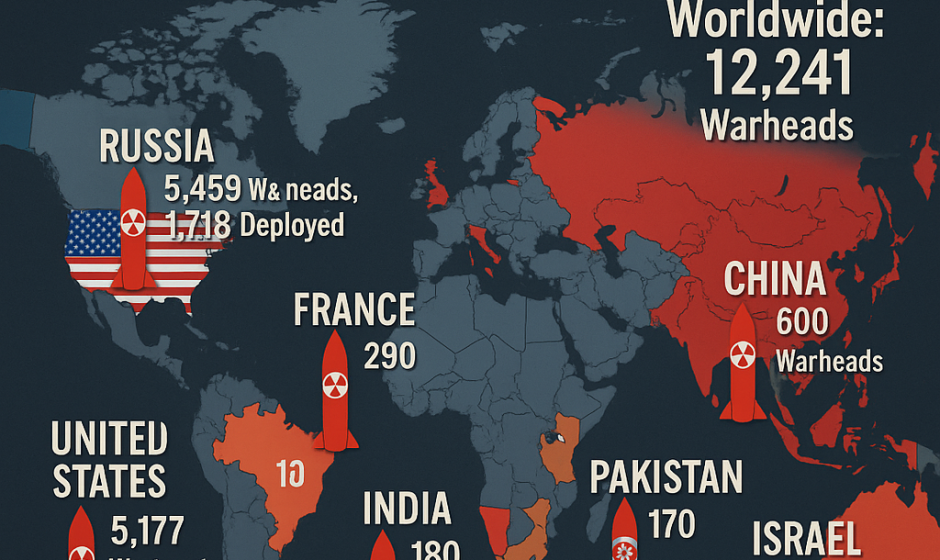
In light of today’s Israeli–Iranian conflict, fears are mounting over escalation via U.S. intervention, regional allies, or even nuclear use. Let’s examine the nine nuclear-armed countries, their arsenals, and what’s changing:
- Russia: 5,459 warheads, of which 1,718 are deployed
- United States: 5,177 warheads, 1,770 deployed
- China: 600 warheads — growing 100 per year; 350 new ICBM silos construction nearly complete
- France: 290 warheads
- United Kingdom: 225, with a cap set at 260
- India: 180 warheads
- Pakistan: 170 warheads
- North Korea: 50 warheads (enough fissile material for up to ~90)
- Israel: 90 warheads — policy of ambiguity continues
Total global stock: 12,241 warheads (as of January 2025), with 9,614 in military stockpiles and 2,100 on high alert (mainly U.S. & Russia)
Why This Matters Now
Disarmament trends reversed: The post‑Cold War era of reductions is ending , all nine nuclear states are expanding or modernizing arsenals
China’s rapid growth: Adding 100 warheads yearly, nearing parity in ICBM capabilities by 2030
AI risks: Integrating AI into nuclear systems increases risks of accidental launch or rash escalation
Weakening arms control: With treaties like New START expiring and others neglected, oversight is dwindling
Regional fallout: Tensions spur Iran and perhaps Saudi Arabia or others to pursue nuclear options, especially if U.S. and Israeli actions escalate
Context & Source
All figures drawn from the Stockholm International Peace Research Institute (SIPRI) Yearbook 2025, the authoritative source on global nuclear arsenals
The nine nuclear states with a combined arsenal of 12,241 warheads are accelerating modernization and expansion. The waning of arms-control agreements, rapid technological advances (notably AI), and regional flashpoints such as Israel–Iran elevate the risk of both misuse and proliferation. This marks a decisive shift into what experts are calling a new nuclear arms race.