

Lebanon’s Internet Cartel Faces a Reckoning
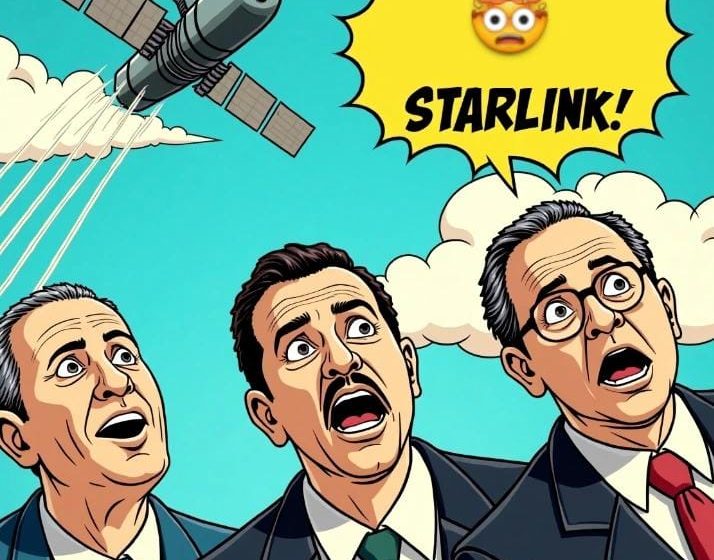
They sold us lag as loyalty, and priced internet like caviar. Now, with Starlink hovering above, Lebanon’s internet barons are panicking not because Elon Musk’s satellite internet is illegal or untested, but because, for once, it actually works.
The Competition They Never Saw Coming
While the world debates 5G, Lebanon’s still watching loading wheels. Starlink, Elon’s cosmic broadband constellation, is now backed by President Joseph Aoun and Telecom Minister Charles Hajj.
The government isn’t handing Musk a free pass. Starlink must follow Lebanese law, share revenue, and respect data sovereignty. It’s not about wiping out local ISPs it’s about building a backup brain for a system that’s been glitching for two decades.
Starlink Isn’t the Solution It’s a Signal
Starlink won’t fix everything. But it’ll prove something: that better is possible. And when that happens in Lebanon, it usually threatens those who benefit from “worse.”
Minister Hajj didn’t just talk he acted. He cut cozy contracts, reactivated the regulatory body, and dared to challenge the pirates. But change doesn’t come by asking politely. It comes by cutting wires that were never connected to the people. In other countries, Starlink lowered prices and filled coverage gaps without killing off local players. Here, it just exposed how little they’ve done. If this is what scares them, it’s because they’ve built empires on delay.
The Cabinet Will Decide
The Starlink plan now awaits Cabinet review. Now Lebanon might finally get internet from the stars because the system on the ground has been in the dark for too long.
Inspired by Zouzou Cash