
Trump United States “will take over” the Gaza Strip
Proposal for Palestinians to Leave Gaza Trump stated that Palestinians should leave Gaza, suggesting a plan that would significantly shift the dynamics of the Middle East and displace over a million residents.
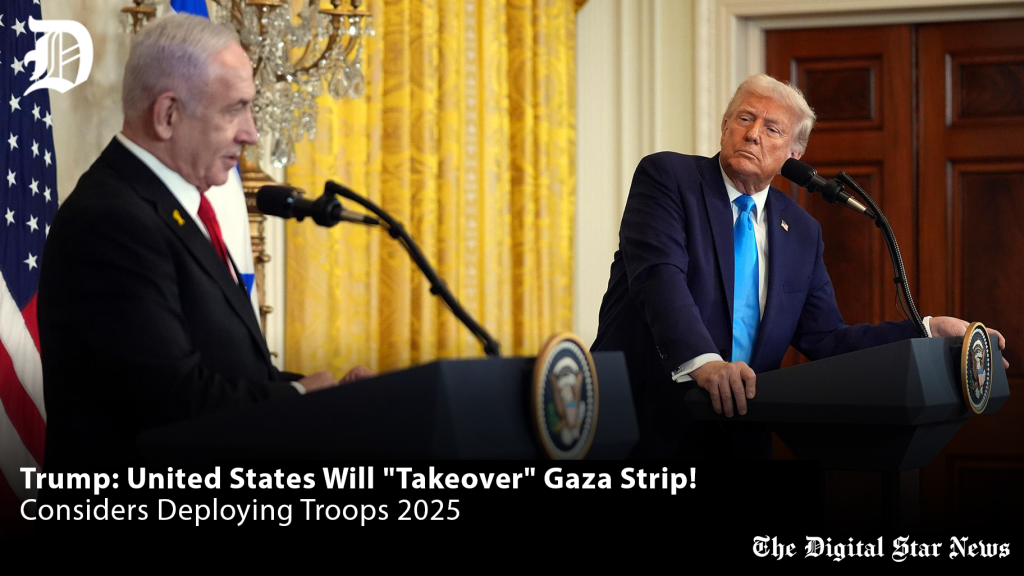
US Takeover and Development of Gaza Trump declared at a joint press conference with Israeli Prime Minister Benjamin Netanyahu that the US would take over the Gaza Strip and transform it into a “Riviera.”(a coastal region with a subtropical climate)
Clearing Gaza for Development Trump promised that the US would dismantle unexploded bombs, remove weapons, and demolish ruined buildings in Gaza.
Potential Deployment of US Troops When asked if he would send US troops to fill a security void in Gaza, Trump did not dismiss the possibility.
Trump’s Vision for Gaza Trump’s proposal represents a bold move from a sitting US president, especially one who has previously criticized America’s long-standing wars in the Middle East. He foresees long-term US ownership bringing stability and job creation to the region.
Regional Opposition and Refugee Concerns Despite Trump’s optimism, many in the region, including Egypt and Jordan, oppose his plan and reject the idea of accepting more Palestinian refugees.
Trump’s Vision for a Palestinian-Free Gaza Trump envisioned a future Gaza without Palestinians, suggesting that the strip is not a suitable home for them.
Alternative Locations for Palestinians Trump proposed relocating Gazans to a new area in the Middle East, citing the current state of Gaza as untenable.
Political Reactions and Implications Trump’s suggestion that Palestinians leave Gaza has sparked controversy, especially among Israel’s far-right politicians and neighboring countries.
Humanitarian Framing of the Proposal Initially presenting his proposal as a humanitarian effort, Trump questioned why anyone would want to remain in war-torn Gaza, proposing instead that Palestinians be given a new, better land.
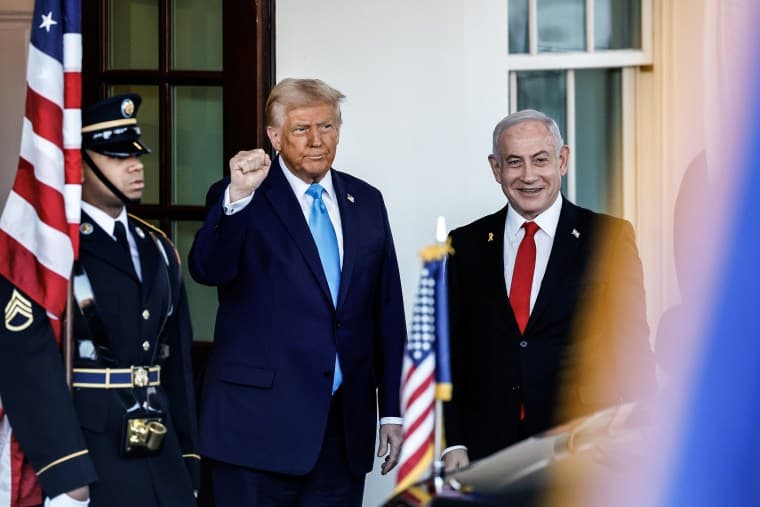
Netanyahu’s Response and Political Implications Israeli Prime Minister Netanyahu appeared pleased with Trump’s stance, which aligns with the views of his far-right allies, who are calling for the end of the temporary truce in Gaza.
Arab Officials React to Trump’s Remarks
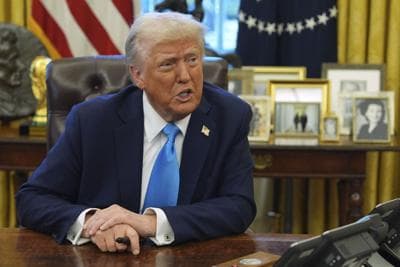
Two Arab officials were taken aback and expressed their concerns following Trump’s unexpected comments. One official described the remarks as “rough, raw, hard to grasp and digest,” noting the need for more clarity and further development to fully understand them. The second official warned that Trump’s comments could jeopardize the fragile ceasefire deal in Gaza.
He emphasized the profound implications of such proposals on the lives and dignity of the Palestinian people and the broader Middle East. “The reality remains that 1.8 million people in Gaza would resist such an initiative and refuse to leave,” the diplomat stated. He added that Saudi Arabia is unlikely to pursue peace under these circumstances, and other nations might reconsider their commitments to the Abraham Accords.
Skepticism from Congressional Lawmakers
Trump’s remarks also drew skepticism from congressional lawmakers, including members of his own party. South Carolina Republican Senator Lindsey Graham commented, “We’ll see what our Arab friends say about that. I think most South Carolinians would probably not be excited about sending Americans to take over Gaza. I think that might be problematic. But I’ll keep an open mind.” The president’s proclamation of claiming Gaza as US territory did not seem likely to persuade Hamas to return to the negotiating table.
Trump’s Determination to Free Hostages
Trump reiterated his commitment to freeing the remaining hostages in Gaza. “We’d like to get all of the hostages, and if we don’t, it will just make us somewhat more violent,” he said. Trump took credit for the hostages-for-ceasefire agreement made before he took office, with outgoing Biden administration officials acknowledging that his imminent arrival helped apply pressure on Israel and Hamas. Israeli Prime Minister Netanyahu, perhaps seeking to ingratiate himself with Trump, praised his efforts, stating, “I think President Trump added great force and powerful leadership to this effort.”
Trump’s Role in the Ceasefire Agreement
Despite his efforts to secure the deal, Trump acknowledged the complexity of the situation, saying, “We’ll see what happens. We’re dealing with very complicated people, but a deal can absolutely get done.” The immediate matter of the ceasefire agreement was just one aspect of the broader discussions between Trump and Netanyahu.
Prospects for Normalization and Nobel Ambitions
The discussion included the potential for broader normalization between Israel and Arab states, particularly Saudi Arabia. Biden pursued this before the October 7, 2023, attacks, and Trump, eyeing a Nobel Peace Prize, may see it as a chance to reshape the Middle East against Iran. However, Saudi Arabia reaffirmed on X that it will not normalize ties with Israel without guarantees of a Palestinian state with East Jerusalem as its capital.
Netanyahu’s Diplomatic and Military Considerations
Netanyahu’s goals in Washington remain unclear—whether he seeks diplomacy or a stronger stance against Iran. He may use the talks to gauge Trump’s position on a strike against Iran amid tensions over its proxies and nuclear ambitions. Before Netanyahu’s visit, Trump authorized a tough approach to prevent Iran from obtaining nuclear weapons and warned of “obliteration” if targeted by an Iranian assassination plot, stating he had left instructions for retaliation.
Complex Relationship Between Trump and Netanyahu
Netanyahu’s visit showed Trump’s support for Israel, but their relationship is complex. Before the election, Biden’s team believed Netanyahu preferred Trump, expecting more freedom in his war efforts. This proved true as Trump lifted restrictions on bomb deliveries to Israel, undoing a Biden-era policy.
Netanyahu’s Extended Visit to Washington
Netanyahu plans to stay in Washington beyond his Tuesday talks with Trump. He arrived at Blair House, the presidential guest residence, late Sunday and is expected to stay until the end of the week, including meetings on Capitol Hill. This extended visit underscores the significance of the discussions and the potential impact on the future of the Middle East.