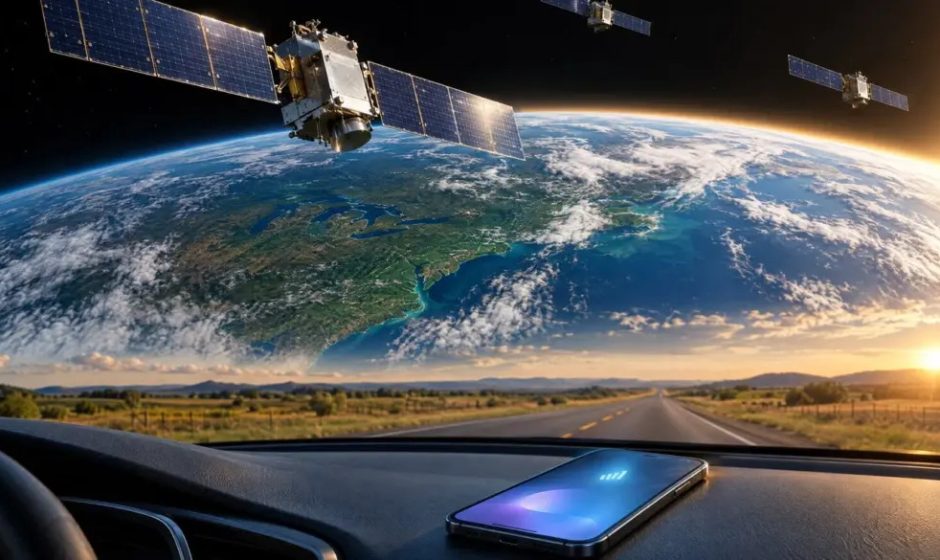

SpaceX is exploring an unconventional strategy to expand its Starlink Mobile network by using existing satellite internet installations to support cellular coverage, potentially challenging major US telecommunications providers AT&T, T-Mobile, and Verizon.
SpaceX President Gwynne Shotwell outlined the concept during a recent earnings call, explaining that the company could leverage its extensive network of Starlink installations across homes, businesses, and telecommunications towers to help establish a nationwide mobile network.
The proposed approach would combine traditional cellular towers, next-generation satellites, and compact radio transmitters known as femtocells to improve connectivity and address coverage gaps.
Shotwell suggested that smaller radio transmitters could be installed alongside existing Starlink dishes, allowing SpaceX to take advantage of infrastructure already deployed across the country rather than relying entirely on new cellular sites.
Leveraging Starlink’s Existing Infrastructure
SpaceX CEO Elon Musk previously discussed the possibility of integrating Starlink’s satellite internet equipment into the company’s mobile network strategy.
Musk noted that Starlink antennas, typically installed on rooftops, are positioned in locations that could potentially support direct connectivity to mobile phones.
With more than two million Starlink customers in the United States, the company already has a substantial infrastructure footprint that could support its expansion ambitions.
However, it remains unclear whether SpaceX intends to recruit existing subscribers to host cellular transmitters or introduce additional equipment for customers willing to participate.
Meanwhile, a reference to a feature called “StarlinkCarrierService” has reportedly appeared in the Android version of the Starlink application, although its intended function has not been confirmed.
Shotwell also highlighted the significant role Wi-Fi plays in mobile connectivity, estimating that between 85% and 93% of mobile data usage occurs over Wi-Fi networks. She emphasized that Starlink’s broadband infrastructure already supports substantial Wi-Fi traffic.
Musk Envisions a Multibillion-Dollar Mobile Business
Despite the ambitious expansion plans, SpaceX has yet to provide a detailed roadmap or cost estimates for developing Starlink Mobile’s terrestrial infrastructure.
During the earnings call, Musk suggested that the company should present a more comprehensive strategy explaining how Starlink connectivity could eventually generate several hundred billion dollars in annual revenue.
He also argued that SpaceX is developing technologies capable of fundamentally changing the competitive landscape of the telecommunications industry.
However, industry experts remain divided over whether the company’s proposed network model can realistically compete with established mobile operators.
Analysts Raise Technical and Regulatory Concerns
Mike Dano, lead analyst at Ookla, the company behind Speedtest.net, questioned whether Starlink subscribers would be willing to install additional cellular equipment on their properties.
Nevertheless, he noted that widespread participation might not be necessary, given that major US wireless carriers typically operate approximately 60,000 to 80,000 cellular towers nationwide.
Dano identified regulatory compliance and network planning as significant challenges. Establishing new cellular transmission sites could require local approvals, while ensuring adequate coverage and preventing radio frequency interference would demand extensive technical coordination.
Anshel Sag, an analyst at Moor Insights & Strategy, expressed stronger doubts about the proposed strategy.
Sag argued that femtocells and Wi-Fi networks have limited transmission ranges, making them unlikely to provide meaningful cellular coverage beyond the properties where they are installed.
He also noted that Starlink’s existing customer base is concentrated largely in rural areas, where properties are often widely dispersed, potentially limiting the effectiveness of such a network.
Another concern is that subscribers hosting Starlink Mobile equipment could experience reduced broadband performance if nearby mobile users share their internet connection.
Sag suggested that SpaceX would still need to invest heavily in constructing or leasing cellular sites across suburban and urban areas to compete effectively with established operators.
He estimated that the company’s combined satellite and terrestrial approach might ultimately reduce network deployment and maintenance costs by approximately 20% to 30% compared with traditional cellular infrastructure, raising questions about whether those savings would justify the investment.
Competition Extends Beyond Network Coverage
Jeff Moore, an analyst at Wave7 Research and former Sprint employee, also expressed skepticism about SpaceX’s plans, citing unresolved technical, commercial, and legal challenges.
Moore pointed out that previous efforts to develop lower-cost nationwide cellular networks have often struggled because of unfavorable economics.
Beyond network infrastructure, SpaceX would also need to establish customer service operations, distribution channels, and potentially a physical retail presence to compete with traditional wireless carriers.
He noted that many American consumers continue to purchase mobile plans through retail stores, meaning that competing with established operators would require more than technological innovation.
Moore suggested that becoming a mobile virtual network operator (MVNO), which would allow SpaceX to offer wireless services using another carrier’s infrastructure, could represent a more practical alternative.
He cited telecommunications companies such as Comcast and Charter, which have opted to focus on their existing strengths while relying on partnerships for mobile connectivity.
An Ambitious Strategy With Uncertain Prospects
SpaceX’s proposed approach reflects its broader ambition to expand beyond satellite broadband and establish a stronger presence in the US mobile telecommunications market.
By combining satellite technology with existing Starlink installations and terrestrial radio equipment, the company hopes to develop a network capable of serving both densely populated cities and remote communities.
However, significant questions remain over deployment costs, regulatory approvals, technical limitations, and customer participation.
While SpaceX believes its technology could reshape the telecommunications industry, analysts caution that building a reliable nationwide cellular network will require substantial investment and careful planning, regardless of the infrastructure already in place.