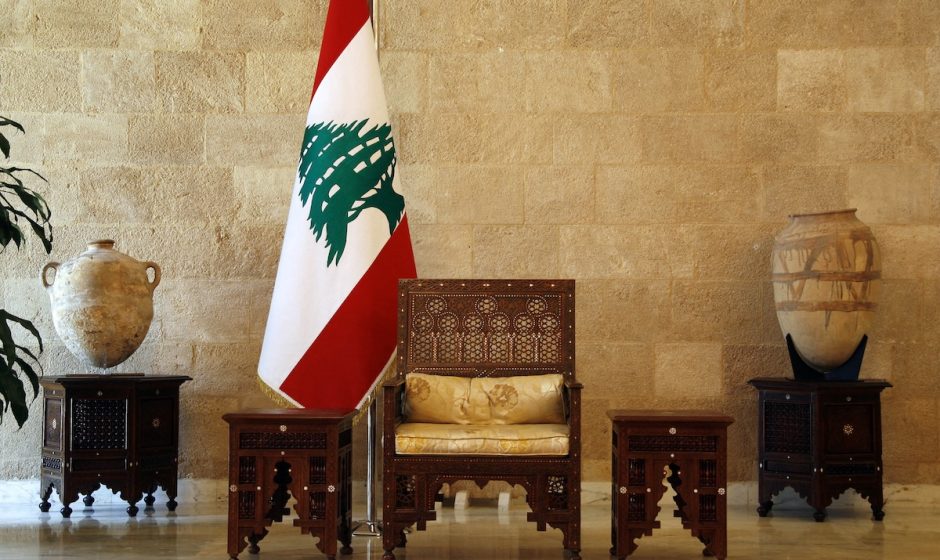

Lebanon is currently facing one of the most severe crises in its history, marked by political deadlock and unfulfilled agreements that have failed to yield lasting stability or prevent the recurrence of conflict. With the presidential vacancy approaching two years, all constitutional timelines for candidacies and election procedures have effectively been rendered void, undermining Lebanon’s highest political mandate—the presidential election itself.
A Crisis of Trust in Lebanon’s Leadership
Lebanon’s primary issue lies in the global community’s growing distrust in its political system, which has repeatedly failed to fulfill commitments made to both regional and international allies. For nearly two decades, various Lebanese administrations have promised to implement United Nations Resolution 1701, a cornerstone of peacekeeping efforts, but none have made substantial progress. This lack of transparency and commitment raises doubts about whether Lebanon’s leaders are unwilling or simply unable to make real changes.
An Arab diplomat, deeply knowledgeable about Lebanese affairs, highlights the world’s frustration: “International stakeholders have long suspected Lebanon’s leaders are aware of the nation’s problems but choose to ignore them, while diplomatic relations proceed as though no issues exist.” This sentiment reflects the pervasive distrust among international allies, who find themselves at an impasse with Lebanon’s ruling class.
New Proposals for Enforcing Resolution 1701
Given the persistent non-compliance, the international community is now developing a new mechanism for implementing Resolution 1701. This would involve deploying a multinational oversight force with powers to monitor Lebanon’s borders, ports, and airports. Such a force would be empowered to report any breaches directly to the United Nations Security Council, potentially invoking Chapter VII of the UN Charter to maintain peace.
In addition to border control, the new enforcement proposal mandates the Lebanese government’s complete authority over its territory, as outlined in UN Resolutions 1559 and 1680, as well as the Taif Agreement that ended Lebanon’s Civil War. However, Hezbollah’s influence has stymied any efforts by successive Lebanese governments to disarm militias and impose full state control.
Contested Doctrines and the Threat of Civil Conflict
Lebanese factions continue to push for an “Army-People-Resistance” doctrine, which endorses the right of resistance forces alongside the official army. However, according to the Arab diplomat, “No logical or legal framework can combine a formal army with an irregular resistance force, as it creates divisions within society and risks escalating into civil war.” This volatile arrangement, he argues, would be unthinkable outside authoritarian regimes where the ruling party’s militia plays the role of protecting its power.
Concerns over Lebanon’s stability have already drawn international attention. French Defense Minister Sébastien Lecornu has expressed fears of an impending civil conflict, while U.S. envoy Amos Hochstein, after meeting caretaker Prime Minister Najib Mikati, confirmed that diplomatic efforts are in progress to secure a ceasefire. Mikati stressed that comprehensive enforcement of Resolution 1701 is essential to the region’s stability. Meanwhile, Arab League Secretary-General Ahmed Aboul Gheit echoed calls for a swift presidential election to restore Lebanon’s institutional functionality.
Domestic Battle Over the Presidency
Despite international calls for swift action, Lebanon’s presidential election remains entangled in political contention. Speaker Nabih Berri, along with his allies, insists on a consensus candidate before voting—a stance that opponents argue favors Hezbollah’s influence. Berri also maintains that Army Commander General Joseph Aoun’s candidacy would require a constitutional amendment, a stance critics view as contradictory given his past position in similar circumstances.
Lebanon’s sovereign factions, however, reject the idea of “consensus” candidates, viewing it as unconstitutional and a mechanism for enabling Hezbollah’s dominance. By eliminating the consensus requirement, these factions aim to prevent Hezbollah from selecting a president aligned with its interests.
The unresolved presidential vacancy has effectively dissolved all deadlines for candidacies and election procedures, creating a constitutional void unprecedented in Lebanon’s history. As Lebanon navigates this highly polarized period, international allies, concerned citizens, and political observers question whether the nation is on the brink of another civil war or poised for a breakthrough. The coming months will prove crucial as Lebanon’s leadership faces mounting internal and external pressures to resolve the crisis.