

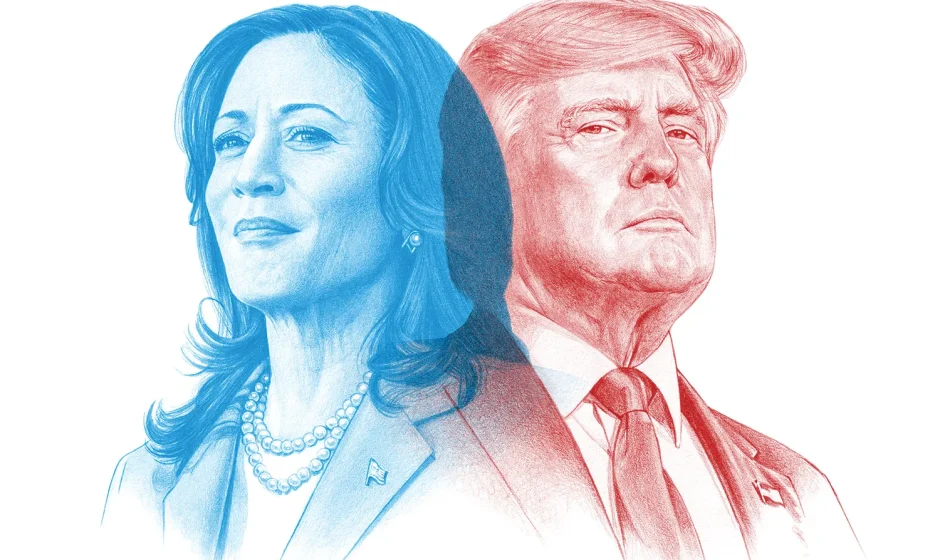

As the U.S. presidential election on November 5 approaches, many Americans view it as a pivotal moment to express their stance on the U.S. administration’s support for Israel and its involvement in conflicts affecting Gaza and Lebanon. The central question is: which candidate, Democrat Kamala Harris or Republican Donald Trump, is more likely to positively impact Lebanon and the broader Middle East?
Political analyst and journalist Ibrahim Rihan explains that “U.S. policy toward Israel and the region remains consistent, differing only in execution style and approach, but with clear objectives.” He emphasized that “regardless of the administration, the primary aim remains the same: to secure Israel’s safety, which inherently protects the security of trade routes in the region.”
Reflecting on Trump’s previous tenure, Rihan noted, “The ‘maximum pressure’ campaign against Iran and its regional allies during Trump’s presidency triggered economic crises across Lebanon, Syria, Iraq, and Iran.” He further added, “Republicans openly endorse a tough stance, while Democrats typically use more indirect methods.”
Rihan pointed out that “the current Democratic administration has set a record in its support for Israel, especially during recent conflicts. The choice between a Republican and a Democrat becomes more complex, particularly given Trump’s greater experience in foreign policy and his support network among Lebanese-Americans.”
He concluded by noting that Trump’s recent message to Lebanese-Americans—pledging to pursue peace in the Middle East and foster stability in Lebanon—signals a unique prioritization of Lebanese issues by Trump’s administration, in contrast to Kamala Harris or the Democratic Party. “Trump’s previous administration demonstrated significant expertise and attention to the Lebanese file, an engagement that the current administration has not matched.”

