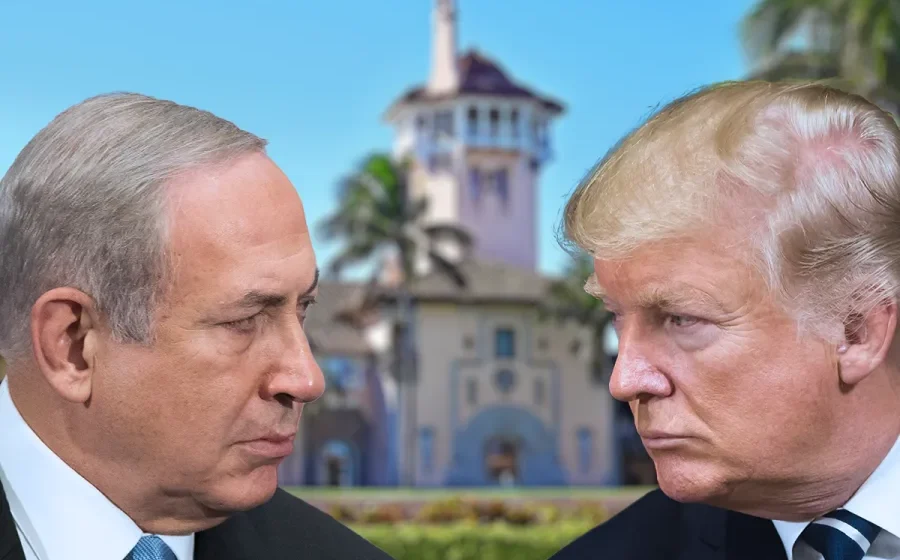

The White House has fallen into the hands of a new leader who claims to have decisive solutions for the world’s most pressing challenges, from security and the economy to migration and ongoing crises. His approach centers on bold, no-nonsense deals—those who refuse to cooperate risk facing the full weight of his resolve.
In Ukraine, the era of unconditional U.S. support has come to an end. President Zelensky, after the latest election results in the U.S., now faces a reality where open financial and military backing is no longer a guarantee. Ukraine may have to swallow the “bitter medicine” of shifting expectations and recalibrated alliances.
However, the new administration’s focus has shifted—its most significant threat is no longer Russia but China. A series of stringent economic policies are on the horizon, policies that could have far-reaching effects not only on China but also on the global economy.
The year has been turbulent in the U.S. and even more so in the Middle East. Gaza has seen devastating levels of violence, with relentless bombings, rising casualties, and widespread displacement. Lebanon, too, stands on the brink of similar chaos. With the region facing unprecedented challenges, the call for a ceasefire has never been more urgent.
While opinions about the U.S. are divided across the Middle East, the reality is clear: the new U.S. president is seen as the only one capable of halting the spiraling violence—even before officially taking office. Calls for a ceasefire have been made before but were repeatedly thwarted by Israel’s determination to achieve what it views as existential security. Prime Minister Netanyahu has doubled down on his strategy, talking about a fundamental shift in the Middle East, moving away from confronting Iranian proxies to direct confrontation.
Biden’s attempts at diplomacy, which included hostage releases and ceasefire negotiations, were met with resistance. However, with a change in leadership, renewed diplomatic efforts are expected, now led by experienced U.S. envoy Amos Hochstein.
For Lebanon, a ceasefire is urgently needed—every day of continued fighting deepens the crisis. The U.S. could play a key role in facilitating peace by supporting the implementation of UN Resolution 1701 and helping to resolve Lebanon’s border disputes, contingent on the country’s efforts to bring its southern front under national control.
Global perspectives suggest that countries may be reluctant to invest in Lebanon’s reconstruction if the threat of renewed conflict looms large. Easing Lebanon’s military tensions with Israel is a tough decision for Hezbollah and Iran, but it could be crucial in preventing further devastation.
Ending the violence requires a strong and pragmatic approach from the U.S. The country must work to stabilize Lebanon and restore hope for Palestinians in Gaza through a renewed path to statehood. Some observers predict that Trump will encourage Netanyahu to continue reshaping the regional power dynamic, after which Israel may elect a more diplomatically-minded leader to avoid triggering direct U.S. intervention—a scenario Trump would be keen to avoid.
Trump, a firm believer in delegation, might entrust Russia with managing the complex relations between Israel, Iran, and Syria. He is likely to allow domestic exhaustion—rather than military intervention—to determine outcomes in other areas, such as Turkey’s influence in Syria.
Despite reports that Israel is considering a ceasefire on its northern front, Israeli Chief of Staff has approved an expansion of ground operations in southern Lebanon. The ultimate question remains: Will Trump succeed where Biden fell short, and finally bring about a lasting peace in the region?