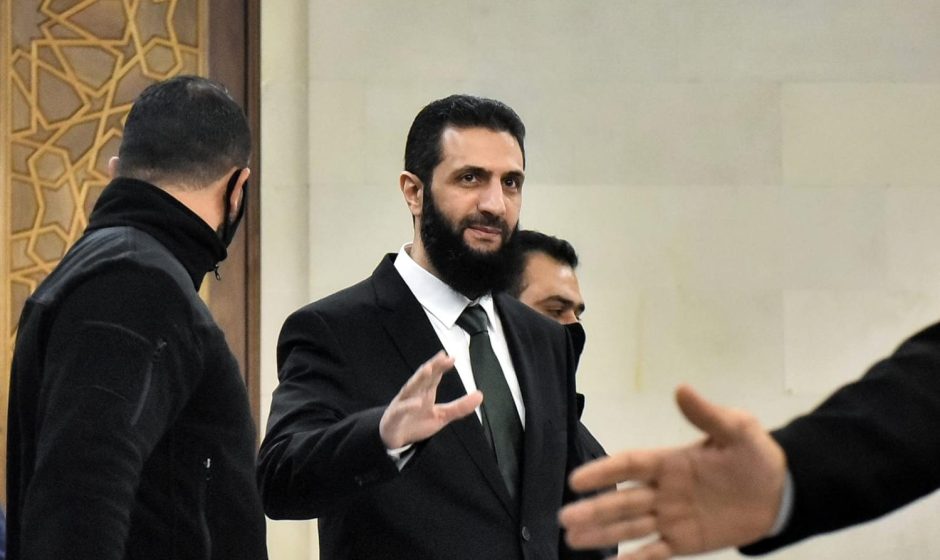

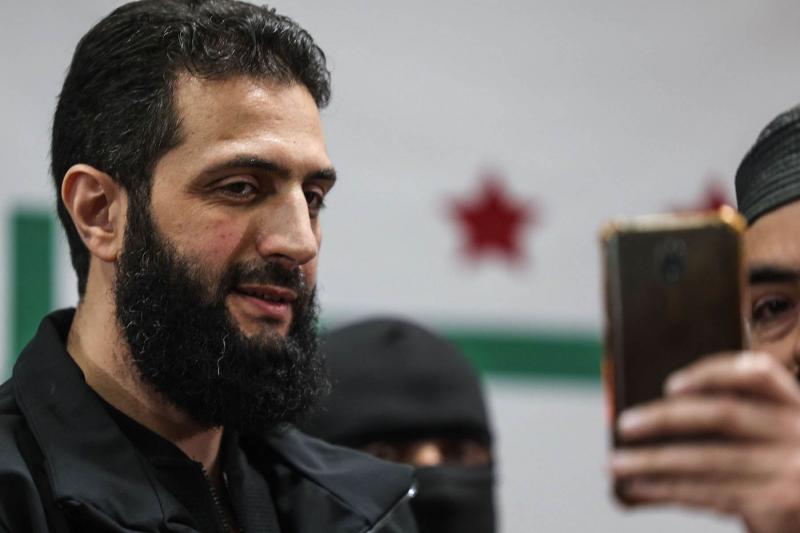
Syria’s de facto leader, Ahmed al-Sharaa, has been named president for the “transitional period,” according to CNN reports. This announcement comes seven weeks after he led the rebel offensive that ousted Bashar al-Assad.
Dissolution of Former Institutions
Rebel military commander Hassan Abdul Ghani declared the cancellation of Syria’s 2012 constitution, along with the dissolution of the former regime’s parliament, army, and security agencies, as reported by the Sana news agency.
Formation of a New Government
Sharaa stated his intention to form an interim legislative council to govern until a new constitution is approved. He also announced that all rebel groups opposing Assad during the 13-year civil war would be dissolved and integrated into state institutions.
Victory Conference in Damascus
These announcements were made during the “Conference for Announcing the Victory of the Syrian Revolution” in Damascus. The event was attended by faction commanders who had fought alongside Sharaa’s Islamist group, Hayat Tahrir al-Sham (HTS).
Priorities of the New Leadership
Addressing the commanders in military uniform, Sharaa emphasized that Syria’s new leadership has a “heavy task and great responsibility.” His primary objectives include filling the power vacuum in a legitimate and legal manner, ensuring civil peace through transitional justice, and preventing acts of revenge.
Rebuilding State Institutions
Sharaa stressed the importance of rebuilding state institutions, particularly the military, security agencies, police, and economic infrastructure, to ensure stability and functionality in the country.
In an interview with Al Arabiya TV, Sharaa stated that holding new elections could take up to four years. He explained that an updated census is required before elections can take place, and drafting a new constitution could take up to three years.
Sharaa reiterated plans for a “national dialogue conference” aimed at uniting all components of Syrian society. The conference would serve as a platform to establish a collective vision for Syria’s future.
Background of the Syrian Conflict
The civil war in Syria began in 2011 when Assad violently suppressed a peaceful pro-democracy uprising. The conflict led to over half a million deaths and displaced 12 million people. HTS, a former al-Qaeda affiliate, dominated the last rebel stronghold in north-western Syria before Assad’s fall
The Fall of Assad
On December 8, rebels entered Damascus after a swift offensive that overran the Syrian army in just 12 days. Assad resigned from the presidency and fled to Russia. An interim government led by Mohammed al-Bashir was established to run the country until March.
Russia’s Role in the Civil War
Russia intervened in Syria’s civil war in 2015, launching tens of thousands of airstrikes in support of Assad. A UK-based monitoring group reported that Russian operations killed more than 21,000 people, including 8,700 civilians
Syria’s Demand for Russian Reparations
During a visit by a top Kremlin delegation, Syria’s government called on Russia to address “past mistakes” by paying war reparations. Russian Deputy Foreign Minister Mikhail Bogdanov met with Sharaa to discuss rebuilding trust through compensation and reconstruction efforts.
Russian Military Withdrawal
ince Assad’s fall, Russia has been gradually withdrawing troops and weapons from its Mediterranean bases in Syria. Satellite images analyzed by BBC Verify showed Russian warships docked at Tartous, suggesting an evacuation had begun. However, experts believe Russia aims to retain both its bases in Syria.
Sharaa’s Perspective on Russia-Syria Relations
In his interview, Sharaa underscored Syria’s long-standing strategic alliance with Russia, emphasizing that the bilateral relationship is crucial for the country’s stability and reconstruction efforts. He pointed out that Syria’s military arsenal is predominantly of Russian origin, making continued cooperation essential for national defense. Additionally, many key sectors of Syria’s economy, including power generation and infrastructure, depend heavily on Russian expertise and investment. Sharaa stressed the necessity of maintaining a constructive relationship with Moscow to ensure ongoing technical and military support while navigating Syria’s political transition.
Read also: