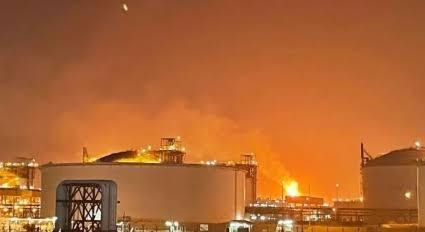

A major explosion at Qatar’s Ras Laffan Industrial City, one of the world’s most important natural gas production and export centers, has disrupted operations and triggered a large-scale emergency response, according to preliminary reports.
The incident reportedly left more than 50 people injured, while several individuals remain unaccounted for as rescue and recovery efforts continue at the site.
Strategic Energy Facility Under Scrutiny
Ras Laffan is considered a cornerstone of Qatar’s energy sector and plays a vital role in the global liquefied natural gas (LNG) market. Any disruption at the facility is being closely monitored by governments, energy traders, and international markets due to its significance in global gas supply chains.
Authorities have not yet released detailed information regarding the cause of the explosion or the extent of the operational impact on production and export activities.
Potential Impact on Global Energy Markets
Energy analysts warn that any prolonged disruption at the facility could place additional pressure on global LNG supplies, particularly as international markets continue to navigate geopolitical uncertainty and ongoing regional tensions.
Qatar remains one of the world’s largest LNG exporters, supplying key markets across Europe and Asia. As a result, even temporary interruptions could influence supply availability and contribute to fluctuations in energy prices.
Concerns for Gas-Importing Economies
The incident may have broader economic implications for countries heavily reliant on imported natural gas. European and Asian economies, many of which depend on Qatari LNG shipments, could face increased energy costs if supply constraints emerge.
Market participants are expected to closely assess the situation in the coming days as more information becomes available regarding the extent of the damage and the timeline for restoring normal operations.
Energy Security Remains in Focus
The explosion comes at a time when global energy systems are already facing heightened pressure from geopolitical developments and supply chain uncertainties. While the incident appears to be localized, it highlights the vulnerability of critical energy infrastructure and its potential impact on international markets.
As emergency operations continue, industry observers will be watching closely for updates on production capacity, export schedules, and the broader implications for global energy security.