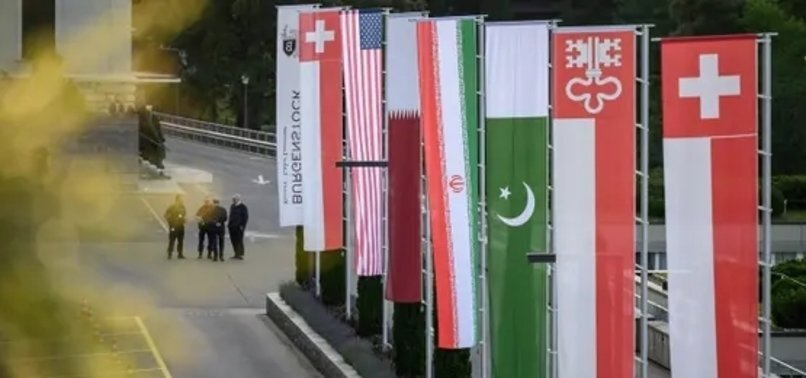

Iran has announced the conclusion of a round of technical negotiations with the United States as part of ongoing diplomatic efforts in Switzerland aimed at ending the conflict and reducing regional tensions, with mediation support from Qatar and Pakistan.
According to Iranian state media, Deputy Foreign Minister Kazem Gharibabadi, who headed Tehran’s technical negotiating team, confirmed that discussions involving the four participating countries had been completed and resulted in an agreement on a framework for future negotiations.
Four Working Groups Established
As part of the understandings reached during the talks, the parties agreed to establish four specialized working groups focused on key areas, including sanctions relief, nuclear issues, economic reconstruction and development, as well as monitoring and implementation mechanisms.
Representatives from Qatar and Pakistan participated in the discussions as mediators, while Iran’s main negotiating delegation, led by Mohammad Bagher Ghalibaf, returned to Tehran following the conclusion of the latest round.
Roadmap Toward a Final Agreement
The announcement follows the completion of the first round of high-level talks between Iranian and U.S. officials in Switzerland. The negotiations began amid heightened tensions, including Iran’s renewed announcement regarding the closure of the Strait of Hormuz and repeated warnings from U.S. President Donald Trump about the possibility of resuming military action against Tehran.
In a joint statement, Qatar and Pakistan confirmed that Washington and Tehran had agreed on a roadmap designed to achieve a comprehensive agreement within approximately 60 days.
Technical Discussions to Continue
The mediators stated that technical-level discussions will continue throughout the week at the Bürgenstock resort in Switzerland, where negotiators are expected to work on the details of the proposed framework and address outstanding issues.
Focus on Regional Stability and Maritime Security
According to the joint statement, the parties also reached an understanding on mechanisms aimed at ending hostilities in Lebanon and agreed to establish a communication channel intended to support the safe passage of commercial vessels through the strategically important Strait of Hormuz.
The latest developments are being closely watched by international observers, as any breakthrough could have significant implications for regional stability, global energy markets, and international trade routes.