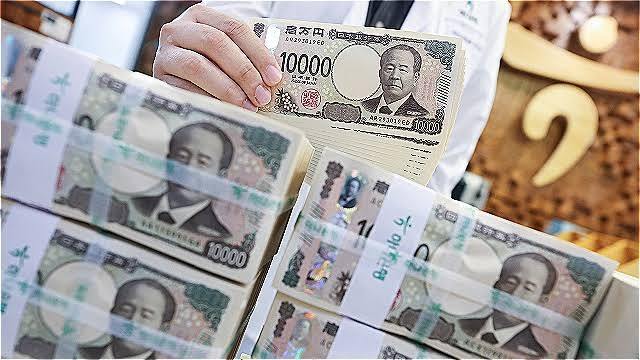

Japan has confirmed its first coordinated currency market intervention with the United States in 15 years, as both countries moved to support the Japanese yen after it fell to its weakest level against the U.S. dollar since 1986.
Japanese Finance Minister Satsuki Katayama announced that the Ministry of Finance purchased yen on Friday in coordination with the U.S. Treasury to counter what she described as “excessive volatility and disorderly market movements.” She added that Tokyo remains in close contact with Washington and that both governments stand ready to intervene again should sharp fluctuations return.
The intervention involved selling foreign currencies and buying yen to boost demand for the Japanese currency and curb its decline against the dollar.
Yen rebounds from four-decade low
The coordinated action came after the U.S. dollar approached ¥164, pushing the yen close to its weakest level in nearly 40 years. Following signs of official intervention, the currency staged a sharp recovery.
During Monday’s trading, the yen strengthened to around ¥155.20 per dollar, its strongest level since early May, before easing slightly to trade near ¥157. It had previously closed Friday’s New York session at approximately ¥157.40 per dollar after hovering near ¥164 just days earlier.
Preliminary estimates from the Bank of Japan suggest Tokyo may have spent as much as $36.6 billion purchasing yen during Friday’s operation, although the Finance Ministry has yet to release the official figure. Other market estimates indicate Thursday’s interventions may have totaled around ¥8.45 trillion (approximately $53.7 billion), pending final confirmation.
Why Washington joined the intervention
U.S. Treasury Secretary Scott Bessent said Washington participated to address disorderly movements in the yen and signaled that further joint action remains possible if market conditions warrant it.
President Donald Trump said the intervention was carried out at Japan’s request, describing it as support for a key ally while suggesting the United States could also benefit financially from the operation.
Analysts note that the U.S. has broader interests in stabilizing the yen, as a prolonged depreciation could encourage Japanese investors to sell U.S. Treasury securities, potentially driving up American borrowing costs. A weaker yen also boosts the competitiveness of Japanese exports, reducing the effectiveness of U.S. tariff policies.
Japan’s Finance Ministry also revealed plans to make greater use of the Federal Reserve’s Foreign and International Monetary Authorities (FIMA) Repo Facility, allowing it to obtain dollar liquidity by temporarily exchanging U.S. Treasury holdings rather than selling them outright.
Long-term challenges remain
The last coordinated currency intervention between Japan and the United States took place in 2011, when major economies acted jointly after the devastating earthquake and tsunami in eastern Japan.
Unlike that intervention, which sought to weaken the yen, the latest effort aims to strengthen the currency after years of pressure caused by Japan’s ultra-low interest rates relative to those in the United States and other advanced economies.
Despite the recent rebound, economists caution that currency intervention alone is unlikely to address the structural factors behind the yen’s weakness, including interest rate differentials, rising energy import costs, expanding government spending, and concerns over Japan’s growing public debt.
Additional pressure has emerged following Prime Minister Sanae Takaichi’s decision to reduce the national sales tax to 1% beginning in April, a move that has fueled expectations of higher public spending and inflation.
Market observers say the long-term stability of the yen will ultimately depend on shifts in Japan’s monetary and fiscal policies, rather than on the scale of interventions undertaken by Tokyo and Washington.