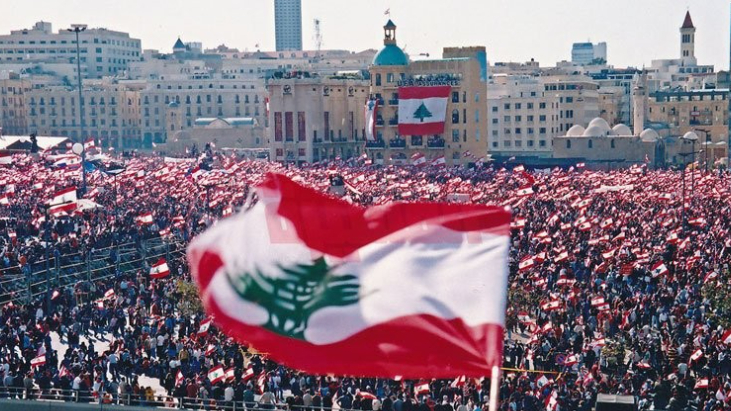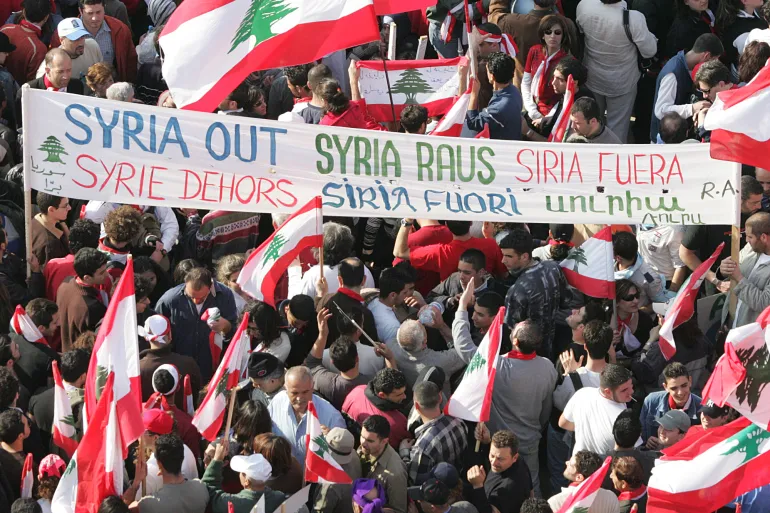

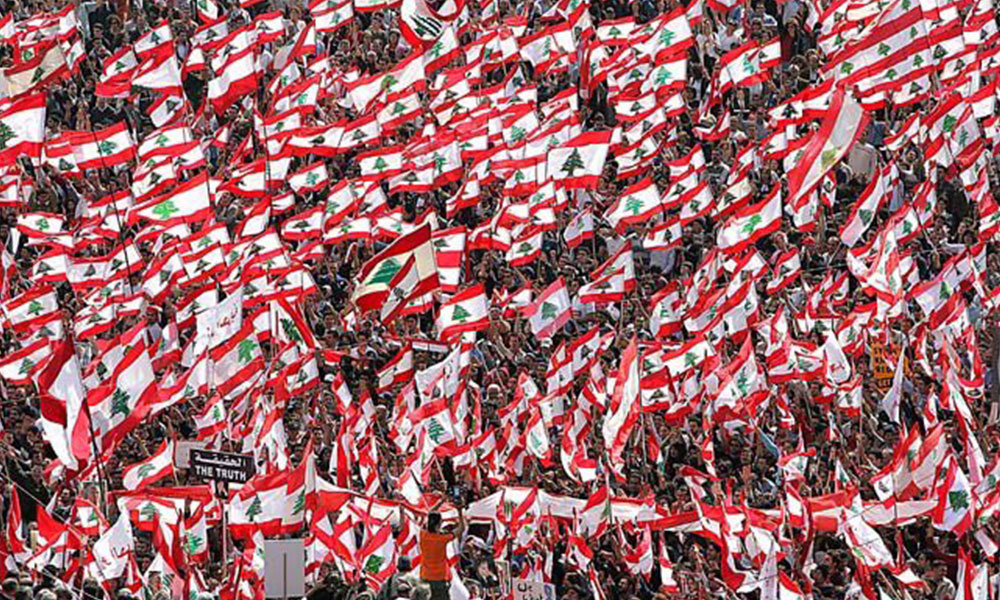
March 14, 2005 or 20 years ago, when around one million Lebanese took to the streets in Beirut, demanding the withdrawal of Syrian troops and justice for Rafic Hariri’s assassination.
This event marked a significant turning point in Lebanon’s political history, creating a deep divide. The March 14 movement emerged in response to anti-Syrian sentiment, as many Lebanese held Syria and its allies responsible for Hariri’s assassination. The alliance championed Lebanon’s sovereignty, independence from foreign influence, and stronger ties with Western nations and Gulf states.
Key Figures and Achievements of the Movement
Prominent leaders of this coalition included Saad Hariri (Future Movement), Walid Jumblatt (Progressive Socialist Party), Samir Geagea (Lebanese Forces), and Amine Gemayel (Kataeb Party). The movement achieved a historic milestone with the withdrawal of Syrian troops on April 26, 2005, ending nearly 30 years of military presence. It also played a crucial role in establishing the Special Tribunal for Lebanon to investigate Hariri’s murder.
Despite winning the 2005 and 2009 parliamentary elections, the alliance faced numerous challenges, including targeted assassinations of its leaders and journalists, as well as instability fueled by opposition groups. Internal divisions and regional developments further weakened the movement over time.
As the newspaper “An-Nahar” wrote on December 13, 2005, “Gebran Tueni could have chosen the easy path, but he refused. In a time of submission, he chose the hard road, as his choice was a promise to Lebanon’s youth and an oath in the March 14 Square.” The revolution also remembers its martyrs, including leaders like Gebran Tueni, Samir Kassir, Pierre Gemayel, and Samir Frangieh, along with other intellectuals, journalists, and politicians who sacrificed greatly during that time.
The meanings of the March 14 revolution and Tueni’s oath, which became a “national anthem” memorized by generations, are still significant today. This revolution, the greatest sovereignty movement in Lebanon’s modern history, doesn’t need lamentation over what endured or didn’t. On March 14, 2005, it united over a million Lebanese from all sects and regions, earning its place as a historic sovereignty revolution.
Has Lebanon’s Economic Crisis Overshadowed the Legacy of March 14?
Today, the rivalry between March 14 and March 8 has faded in significance, as Lebanon faces a severe economic crisis, political corruption, and widespread public dissatisfaction. The March 14 Alliance has largely dissolved, especially after Saad Hariri stepped away from politics and Walid Jumblatt distanced himself from the movement.
Lebanon’s political scene is no longer just about the March 14 vs. March 8 divide, but rather about the struggle for survival