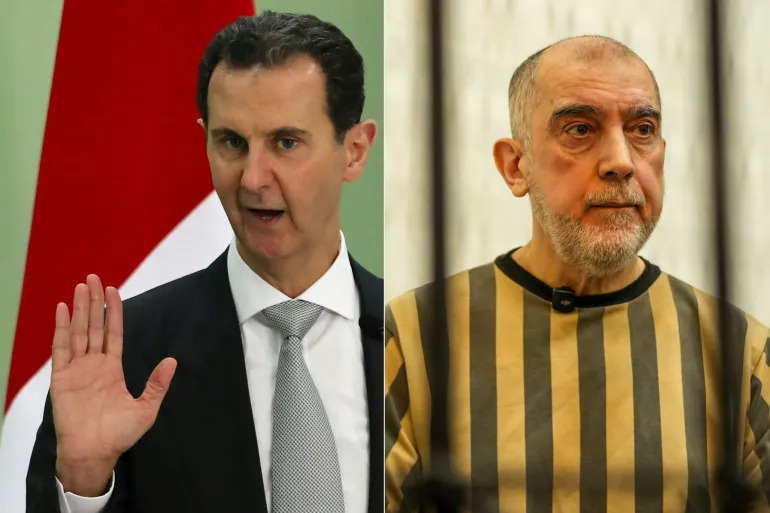

A criminal court in Damascus on Tuesday issued death sentences in absentia against former Syrian President Bashar al-Assad, his brother Maher al-Assad and several prominent figures from his former regime, following convictions related to alleged war crimes and crimes against humanity committed during the conflict that began in 2011.
The ruling was announced during a hearing of the Fourth Criminal Court in Damascus in a case involving Atef Najib, a former senior security official and cousin of Bashar al-Assad, along with other defendants who remain at large.
The court unanimously convicted Bashar al-Assad of murder and incitement to murder and sentenced him to death in absentia. The court also found him responsible for crimes against humanity and intentional killing.
Judge Fakhr al-Din al-Aryan, speaking during the hearing, described Assad as the “moral perpetrator” of crimes committed against Syrians, arguing that responsibility extended beyond crimes carried out directly by him.
Maher al-Assad also sentenced to death
The court also handed down a death sentence against Maher al-Assad, a key military figure in the former Syrian government.
Arrest warrants were reportedly issued for Assad and other defendants who remain outside the reach of the court.
Atef Najib convicted over crackdown in Daraa
The ruling also targeted Atef Najib, who previously headed the Political Security branch in Daraa and is a cousin of Bashar al-Assad.
Najib was convicted of several offenses, including intentional killing, the killing of children under the age of 15, and torture resulting in death. The court classified the alleged acts as crimes against humanity and imposed the death penalty as the harshest available sentence.
According to Syria’s official news agency, SANA, investigations and witness testimony established Najib’s involvement in interrogating detainees following the outbreak of protests in Daraa in 2011.
The court also heard allegations that the Political Security branch under Najib’s command participated in the raid on Daraa’s Omari Mosque alongside other security forces.
Najib was further accused of overseeing security operations against civilians in Daraa during the early stages of the Syrian uprising, including arrests linked to the detention of children in the city in March 2011.
A significant step in accountability efforts
The court held eight hearings as part of the case against Najib, with proceedings focusing on alleged abuses committed against civilians during the early years of the Syrian conflict.
The first hearing in Najib’s trial was held on April 26 as part of a broader judicial process aimed at establishing the facts, providing justice for victims and holding those accused of serious crimes accountable.
The latest rulings represent a significant development in efforts to pursue members of Syria’s former ruling establishment following the fall of the Assad government.