

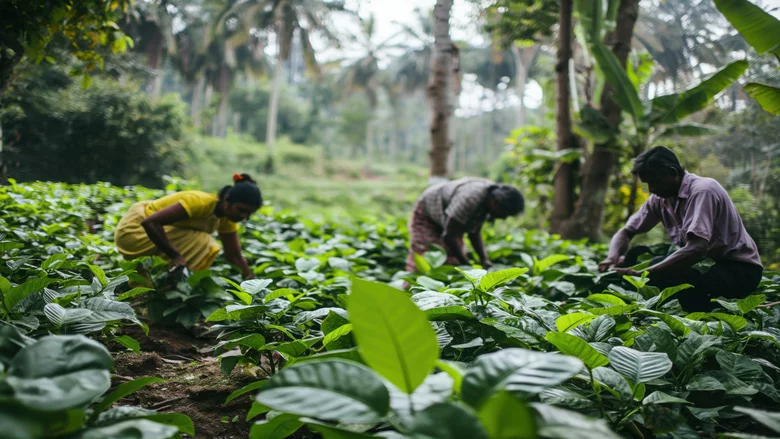
The World Bank has launched a groundbreaking program aimed at empowering farmers to access much-needed capital for their agribusinesses. This initiative targets smallholder farmers who often struggle to secure funding to expand or enhance their operations. By partnering with local banks and microfinance institutions, the program will introduce accessible financial products, such as loans and grants, tailored specifically for the agricultural sector.
In addition to financial support, the program emphasizes building farmer resilience and production capacity. Through increased capital access, farmers can invest in advanced agricultural practices and modern equipment, leading to higher yields and improved product quality. The program also includes tools for climate risk mitigation, offering resources like crop insurance and climate-resilient seeds to protect against environmental challenges.
Capacity building is central to the World Bank’s program. It provides training and technical assistance to help farmers enhance their financial management skills, understand effective risk assessment, and adopt advanced agronomic practices. Farmers will gain insights into supply chain management and data usage, helping transform small farms into profitable agribusinesses with long-term self-sufficiency.
A key focus of the program is promoting climate-smart agriculture. By encouraging sustainable practices such as water conservation, soil health improvement, and renewable energy adoption, the initiative not only aids in fighting climate change but also secures a stable income for farmers. The program’s support for sustainable farming reduces environmental impacts while fostering resilience in the agriculture sector.
The program also aims to establish strong market linkages for farmers. By connecting them with agro-processors, retailers, and export companies, it helps farmers gain access to larger, more profitable markets. Such partnerships reduce reliance on intermediaries and allow farmers to capture more profit, stabilizing their income and creating new opportunities for growth and investment.
Leveraging technology and fostering collaborations with government and private sector partners further enhance the program’s impact. Digital tools like precision farming applications and peer-to-peer lending platforms help farmers optimize operations. Partnerships with government and industry players provide policy support and investment, ensuring a holistic approach to strengthening the agricultural sector and rural economies.