


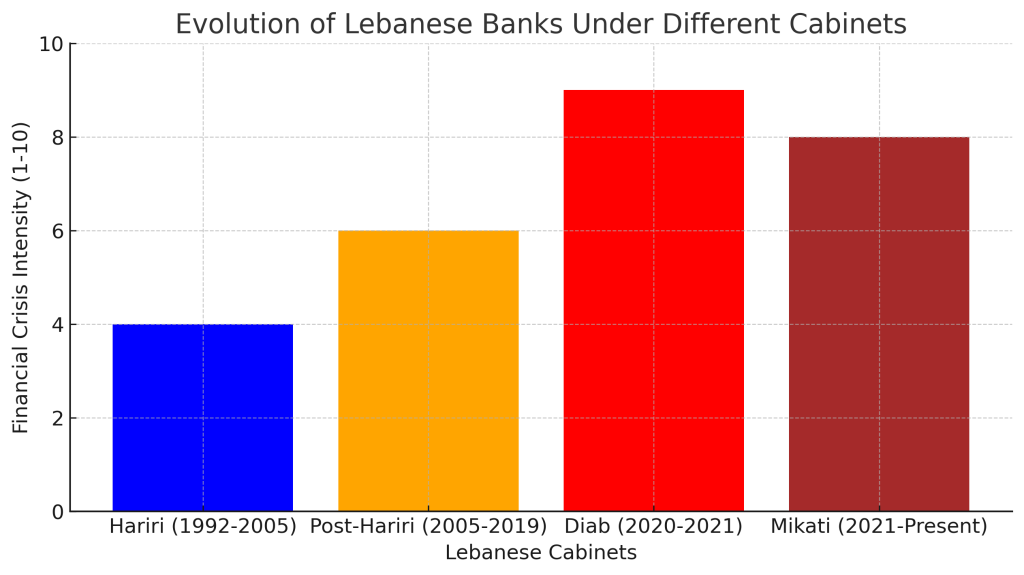
Lebanese banks have always been closely tied to the government, influencing and being influenced by political decisions. Each cabinet has had its own approach to handling financial crises, with varying degrees of success and failure.
Hariri Era (1992–2005) – The Boom & Debt Accumulation
During Rafic Hariri‘s tenure, Lebanese banks played a crucial role in funding public debt. This period saw a significant rise in dollarization and economic liberalization, which initially spurred economic growth but also led to substantial debt accumulation
Post-Hariri Cabinets (2005–2019) – Warning Signs Ignored
After Hariri’s assassination, successive governments failed to implement necessary banking reforms. Political instability further exacerbated the banking sector’s vulnerabilities, as warnings about the unsustainable financial practices were largely ignored
2019 Revolution & Hassan Diab’s Government (2020–2021) – The Great Collapse
The 2019 revolution marked a turning point, with widespread protests against corruption and economic mismanagement. Hassan Diab’s government introduced capital control policies and informal restrictions on depositors, but these measures failed to stabilize the financial system
Mikati’s Governments (2021–Present) – The Stalemate & Crisis Continuation
Under Najib Mikati, Lebanon entered negotiations with the IMF, but faced resistance from banks regarding loss distribution. The ongoing battle over financial restructuring and depositor rights has left the country in a prolonged state of economic crisis
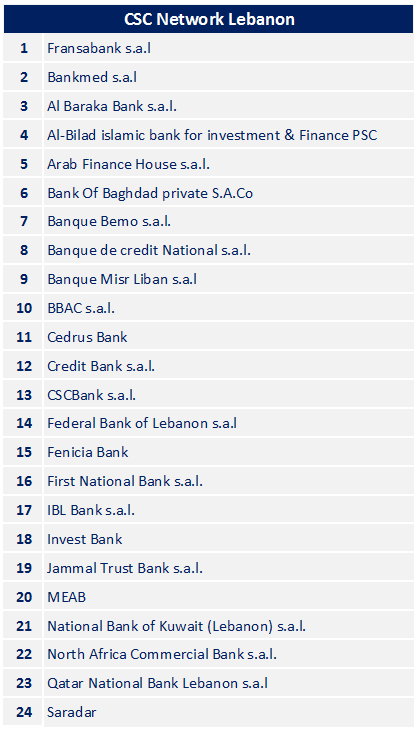
Today, Prime Minister Nawaf Salam’s government, called “Reform and Rescue,” is being presented in Parliament. Over two days, the session will focus on reading the decrees of Mikati’s government’s resignation, Salam’s appointment and formation, followed by the ministerial statement by the Prime Minister, on which his government will gain confidence. Then, parliamentary speeches will begin, with each speech lasting half an hour for oral speeches and fifteen minutes for written ones,
Politically, this government is significant because it is the first government of the new era, coinciding with the beginning of President Joseph Aoun’s term and the content of his inaugural speech and Salam’s speech upon his appointment
Additionally, it comes after numerous political, security, and economic challenges, making it face a tough test, even though its term is short, not exceeding the upcoming parliamentary elections.
And the question remains: What will this government bring, and what will be the state of the banking sector?

